Sovereign RAG: why we built the most independent AI system on the Algerian market
Every day, Algerian companies send their contracts, technical documents, and internal data to foreign APIs to “have them analyzed by AI”. No one knows where this data ends up. Here’s why we built a different path.
In just a few months, generative AI has become a reflex for many business teams. A technical document to summarize? Paste it into ChatGPT. A contract to analyze? Send it to Claude. A report to synthesize? Off to Gemini.
At Qantra, we decided to take a different path. Here’s why we built the most sovereign RAG system on the Algerian market, and how it can turn your dormant documentation into a competitive advantage, without ever leaving your infrastructure.
01 — The problemIs your data leaving the country without you knowing?
What looks like a productivity gain is in reality a silent hemorrhage of strategic data. With every request, your content is transmitted to servers hosted in the United States, Ireland, sometimes elsewhere. These providers fall under foreign jurisdictions: the US Cloud Act, the Patriot Act, FISA. They can be compelled to hand over your data without even informing you.
And it’s not just a regulatory compliance issue. It’s a question of economic and strategic sovereignty. Your supplier contracts, your market analyses, your proprietary algorithms, your internal knowledge bases, all of this is your competitive advantage. Handing it over to third parties you don’t control means giving away your cards to actors whose interests are not yours.
For sensitive sectors (banking, insurance, healthcare, energy, defense, public sector), this risk is a deal-breaker. For others, it is simply underestimated.
02 — Our answerA RAG system designed for sovereignty
RAG (Retrieval-Augmented Generation) is an AI architecture that combines two building blocks: a search system capable of retrieving the right information in your documents, and a language model capable of formulating an answer based on that information. Today, it is the most effective method to transform internal documentation into an intelligent assistant.
But almost all RAG solutions on the market rely on LLMs hosted abroad. Your documents pass through public APIs before being processed. The leakage risk is intrinsic to the architecture.
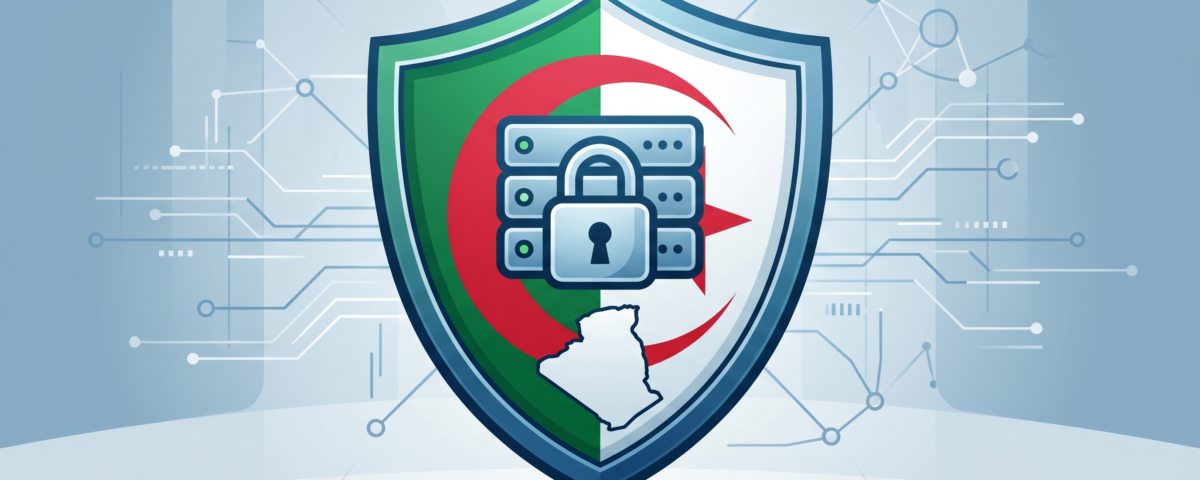
Our RAG runs entirely within the client’s infrastructure. Your documents never leave your premises. No foreign cloud. No third-party API.
03 — ArchitectureThe 3 technical pillars of a truly sovereign RAG
Local LLM, zero leakage
The model runs on your servers, behind your firewall. On-premise, Algerian sovereign cloud or dedicated server. You choose the geographic zone.
Not glorified Ctrl+F
Ask a question in natural language. The system understands intent, identifies relevant documents, connects sources, and formulates a sourced answer.
Every line of code
Vector search, orchestration, fine-tuning, deployment: everything is designed and built by Algerian engineers. No offshore middleman.
Pillar 1 — Total sovereignty: local LLM, zero leakage
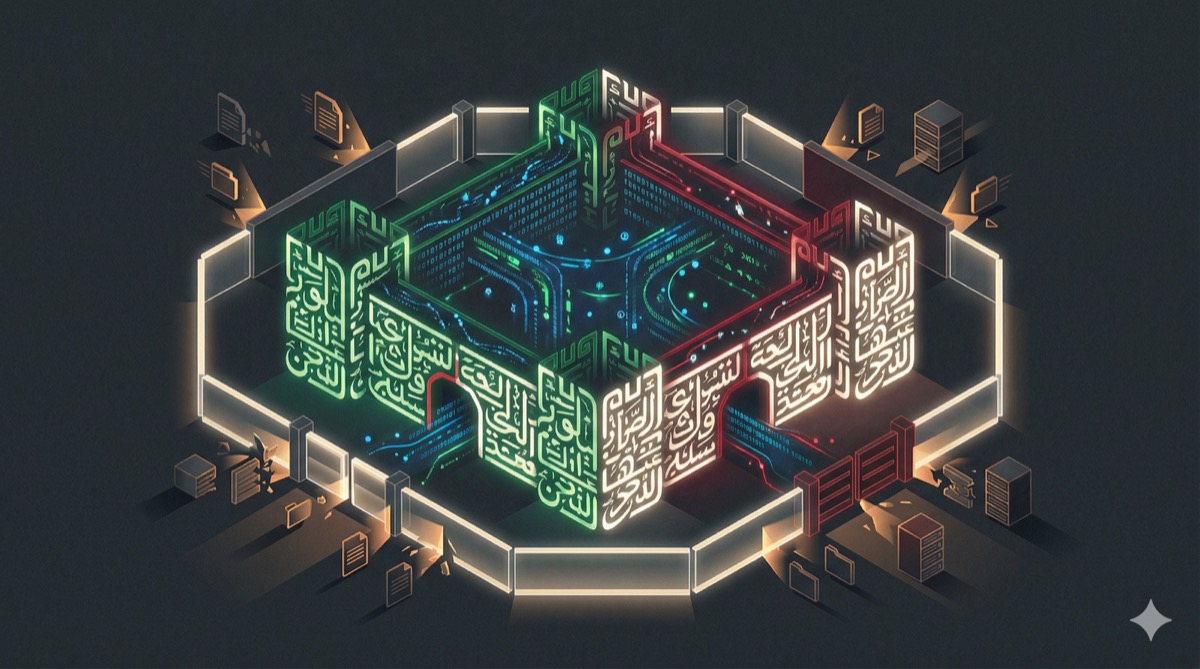
The language model runs on your servers, in your datacenter, behind your firewall. Depending on your constraints, we deploy on your existing on-premise infrastructure, an Algerian sovereign cloud, or a dedicated server in a geographic zone of your choice.
No outbound connection is needed for the system to operate. Your documents are indexed locally, your queries are processed locally, your responses are generated locally. What is yours stays yours. Period.
This architectural choice has a cost: it requires sharp expertise to optimize open-source models (Mistral, Llama, and their derivatives) so they reach the performance level of proprietary solutions. That’s exactly our craft.
Without sovereignty, AI performance is a poisoned gift. You gain 2 hours a day, but you lose control over your informational heritage.
Pillar 2 — Contextual understanding, not glorified Ctrl+F
Keyword search is dead. Your collaborators no longer want to guess the right terms to find a procedure. They want to ask a question in natural language and get a precise, sourced, immediate answer.
That’s exactly what our RAG does. You ask a question the way you would ask an expert colleague: “What are the warranty terms in contract XYZ signed with this supplier in 2024?” The system understands the intent, identifies the relevant documents, connects information across multiple documents if needed, and formulates a synthetic answer with source references. All in a few seconds.
Context is king. A team that used to spend 4 hours a day searching through PDFs gets those 4 hours back to do its real job.
Pillar 3 — 100% Algerian expertise, every line of code
Our system was not imported from San Francisco. It was not subcontracted to an offshore provider. It was not assembled from proprietary building blocks we don’t control.
Every component (vector search, orchestration architecture, model fine-tuning, production deployment) was designed and built by Algerian engineers. Here. For real.
Why does it matter? Because true technological sovereignty is not just about choosing a local hosting provider. It starts with mastering the code you run. If tomorrow a component breaks, if a model needs to be adapted to your specific business, if a vulnerability is discovered, you want a team able to intervene directly inside the engine.
Real technological sovereignty is when you master the code. Not just the usage license.
04 — SectorsWhich sectors benefit most?
Our sovereign RAG approach is particularly relevant for organizations that combine a dense documentary heritage with a strong requirement for data confidentiality.
If you recognize your organization in this list, you have probably already identified AI use cases. The question is no longer “should we go for it”, but “how do we go for it without compromising our data”.
05 — MethodHow to integrate a sovereign RAG into your organization
Deploying a sovereign RAG is not a multi-year project. Our method fits in four steps, spread over 6 to 12 weeks depending on the scope’s complexity.
We identify together the highest-ROI use cases: which documents to index, which questions to solve, which collaborators to target first.
First prototype on a representative subset of your data, in an isolated environment. You measure real value before any heavy investment.
Scale-up: connection to your documentary sources, integration into your existing tools, training of your teams, production rollout on your infrastructure.
We support your teams over time so the system evolves as your needs become clearer.
All the code remains your property. All the infrastructure remains under your control. All the models run within your perimeter.
06 — Case study50 years of Al Mugtama archives digitized in 6 weeks
Mugtama, a leading Arab-world magazine published in Kuwait since 1970, wanted to make 50 years of editorial heritage searchable. Plain text archives, no metadata, old fonts, complex layout. No classic engine could handle it. In 6 weeks, we deployed an assistant that semantically structures the archives and integrates natively into mugtama.com via a secure API.
Read the Mugtama case studyfor editors
07 — ResearchICDAR 2026 benchmarks: measured performance
Our research team submitted to ICDAR 2026 (International Conference on Document Analysis and Recognition) a paper on Arabic RAG, accompanied by a new public benchmark built on the Mugtama archives.
7,400 validated Q&A pairs on 5,000 articles, 11 question categories. First public Arabic RAG evaluation benchmark at this scale.
+12.9% vs fine-tuned BGE-M3, +26.6% vs BM25. Our hybrid pipeline (keyword filtering then semantic ranking) beats both reference baselines.
Paper submitted to ICDAR 2026, the reference conference in document analysis. Code, pipeline and benchmark open-sourced.
08 — ConclusionThe time to act is now
Generative AI is not going to wait for Algerian companies to be ready. Your competitors are already taking position, sometimes with solutions that will blow up in their face in 6 months when an audit or an incident reveals the leakage of their strategic data.
You have two options. Endure this wave by sending your content to foreign providers. Or take the lead with a sovereign approach that gives you the performance of generative AI without the risk.
At Qantra, we believe there is no choice to make between the two. Our sovereign RAG proves it every day, with our clients.
Want to see how it would integrate at your company?
Book a free 20-minute scoping session with our team. We study your context, your constraints, your priority use cases, and we tell you frankly whether this approach is the right one for you.
3-point summary
- Qantra’s sovereign RAG runs entirely within your infrastructure, with no dependency on foreign APIs.
- Three pillars: local LLM, natural contextual understanding, 100% built by Algerian engineers.
- Particularly suited to sectors where data confidentiality is critical: banking, insurance, energy, healthcare, public sector.